
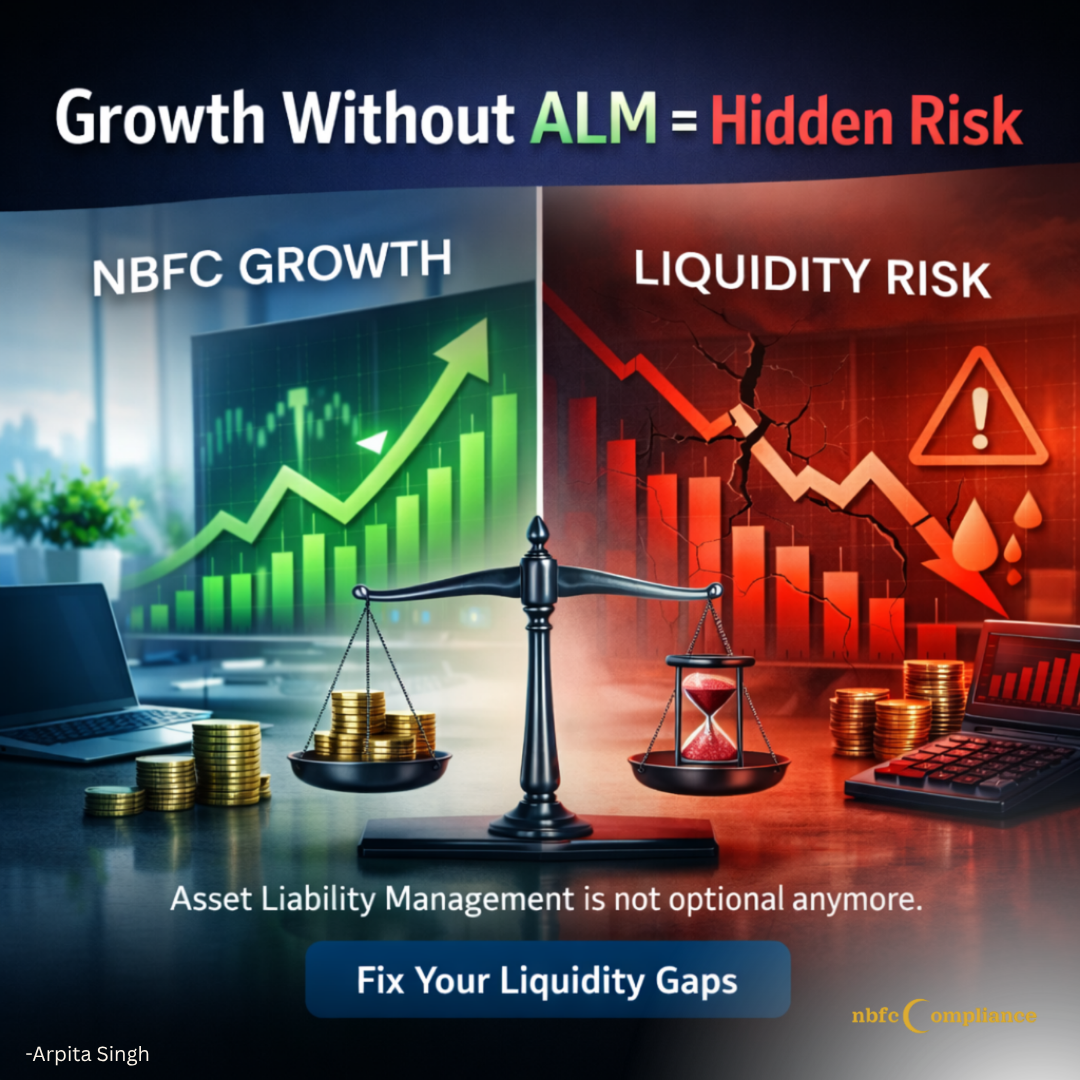
Your NBFC can grow rapidly—and still collapse.
In today’s evolving financial ecosystem, growth alone is no longer a sign of strength. As Non-Banking Financial Companies (NBFCs) expand their loan books and diversify funding sources, the complexity of managing finances increases significantly. Without proper Asset Liability Management (ALM), even a fast-growing NBFC can face severe liquidity stress and operational instability.
This is where ALM becomes not just important—but essential.
Understanding Asset Liability Management (ALM)
Asset Liability Management (ALM) is the process of managing the maturity and cash flow mismatch between assets (loans given) and liabilities (borrowings).
In simple terms, ALM ensures that:
- Your inflows (loan repayments) match your outflows (repayments of borrowings)
- Short-term obligations are backed by sufficient liquidity
- Long-term lending is supported by stable funding sources
A weak ALM framework can lead to serious consequences, including liquidity crunches, increased borrowing costs, and loss of stakeholder confidence.
Why NBFCs Face Liquidity Risk
As NBFCs scale, they often:
- Lend long-term (e.g., MSME loans, LAP, project finance)
- Borrow short-term (e.g., working capital lines, CPs, short-term debt)
This mismatch creates liquidity risk.
Even a small delay in repayments or disruption in funding can create a domino effect, leading to:
- Cash flow stress
- Inability to meet obligations
- Rating downgrades
- Regulatory concerns
Impact of Poor ALM in NBFCs
Poor Asset Liability Management can result in:
1. Liquidity Crunch
Inability to meet short-term liabilities due to mismatch in cash flows.
2. Increased Cost of Funds
Higher borrowing rates due to perceived risk.
3. Operational Disruptions
Delay in disbursements, affecting customer trust and growth.
4. Regulatory & Compliance Issues
Non-adherence to RBI guidelines can lead to penalties and restrictions.